Machine Learning 101
An interview with machine learning expert Thomas Hamelryck

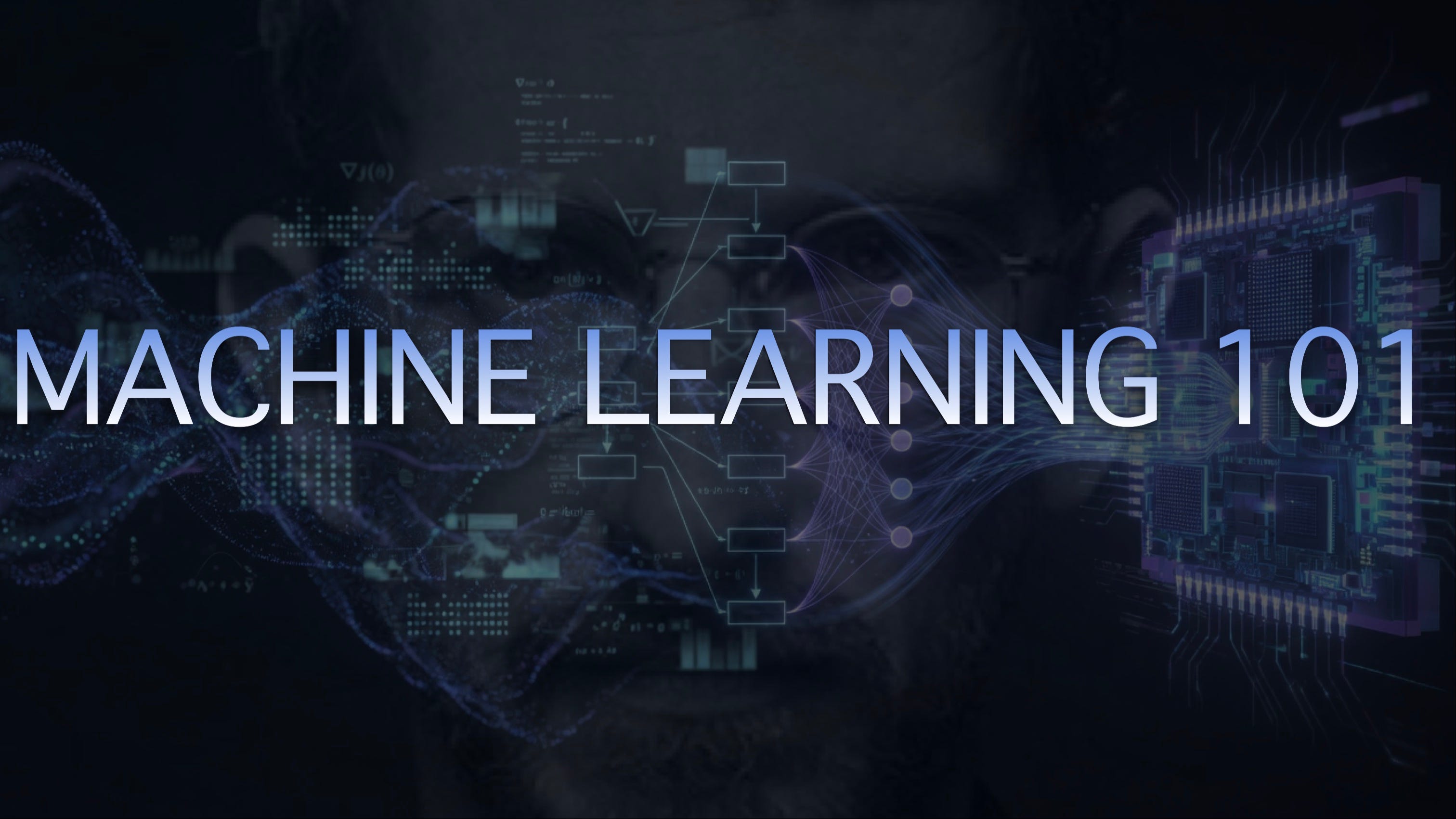
This July and August at Philosophy Portal, we will be hosting machine learning expert Thomas Hamelryck and singularity theorist Nikola Danaylov for a two-month exploration of the notion of technological singularity.
The first half of the course will be focused on the nature of machine learning, its real and its mythology, its limits and its potential, as well as the practical consequences for human relationships and institutional development.
The second half of the course will be focused on the nature of story itself, the human story, the story of capitalism, technology, politics, and the question of whether or not we need to learn how to rewrite the human story in the face of 21st century technological developments.
Both Hamelryck and Danaylov have dedicated their life to these topics. Hamelryck on machine learning and Danaylov on the question of story in the context of singularity.
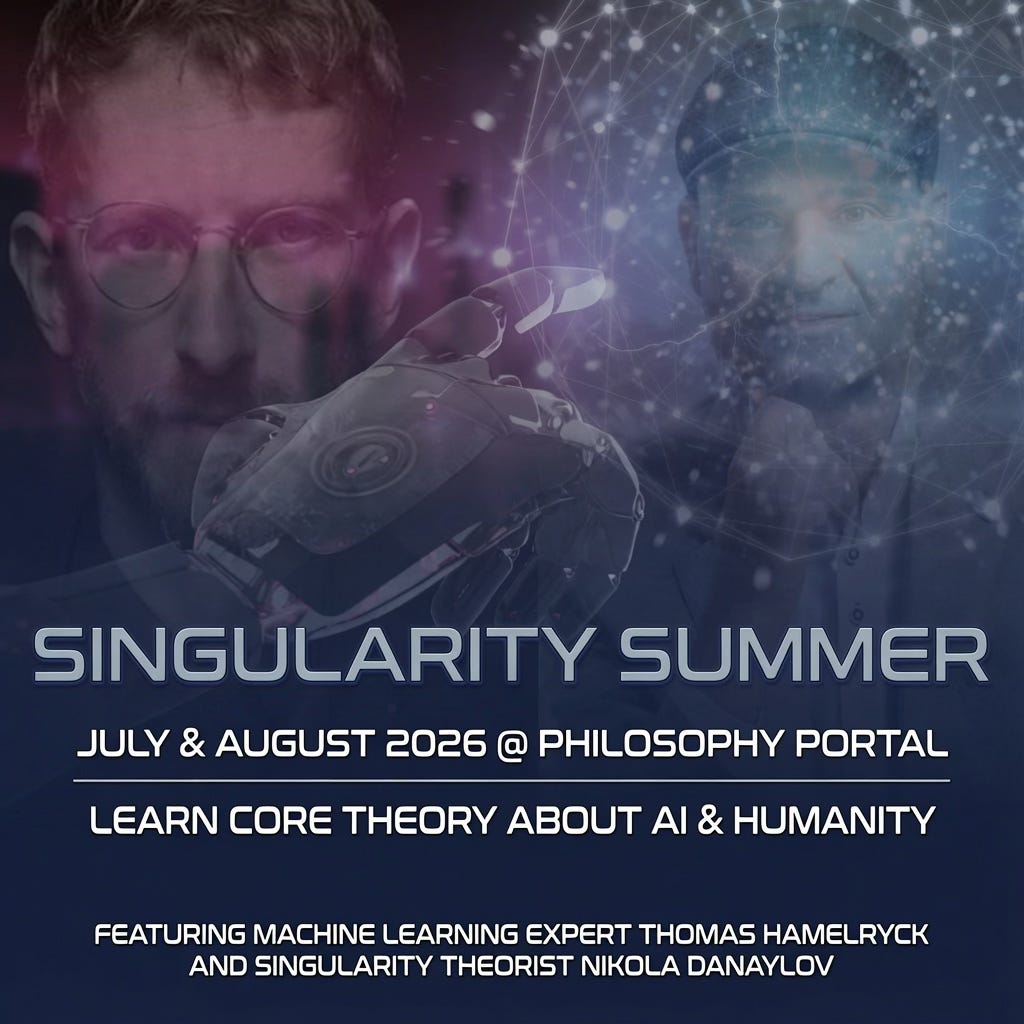
To join us, check the link in the description for the full course, or consider becoming a member at the portal and get access to all of our live events as well as our entire recorded history.
What you are about to read is an interview with machine learning expert Thomas Hamelryck. This interview functions as pre-course content for Singularity Summer. For the full video, see:
1. What is the most basic definition of “machine learning” and how does this concept relate to “artificial intelligence”?
Yes, that’s a bit of a messy story, if you ask me.
Artificial intelligence is about creating machines that essentially mimic human intelligence or an aspect of human intelligence, so they are capable of performing a task that typically is something that a human would perform.
And so that’s the broad category of artificial intelligence. Then within artificial intelligence, you have machine learning, and these are algorithms or machines that learn from data. So machine learning is a part of artificial intelligence.
Artificial intelligence, that sounds really spectacular, but actually within artificial intelligence, you would find something as simple as, for example, linear regression, which relates one variable with another variable. Let’s say you want to predict the weight from the height of a person, that’s an algorithm more than 200 years old. It was executed on a piece of paper, and that would be technically then machine learning within artificial intelligence.
So it’s kind of a bit of an interesting situation with respect to hype and with respect to expectations.
And then you have things like neural networks, for example. They are machine learning methods, learning from data. All of that is embedded within the broader category of artificial intelligence.
And then you have deep learning, which is basically a set of algorithms that make use of neural networks, very big neural networks that again learn from data.
That’s kind of artificial intelligence and machine learning in a nutshell.
1a. Is artificial intelligence the broadest category, with machine learning being a subcategory within that category?
Yeah, that is the traditional way in which this is explained. And that actually also means that a lot of old and boring statistical methods people would not associate with robots are doing human-like behavior. A lot of these older methods, these statistical methods are formally then also within the category of artificial intelligence, which is kind of an interesting situation.
It maybe also exposes a bit the fact that there is quite a bit of hype around all these things.
1b. Is artificial intelligence itself a confused concept?
Well, it’s something that is nice to use in an informal way, but it’s definitely overused.
What do we actually mean by intelligence? There are many definitions around that. It’s definitely a term that is now associated with a lot of hype. Most of what people call artificial intelligence is essentially statistics or computer science, mathematics, or combination of these things.
Often the algorithms behind these artificial intelligence methods, the algorithms are often a bit simpler than what people might expect. Also, because a lot of these algorithms have these very catchy names, like for example, “the attention mechanism”, this is just an algorithm that you execute, right? It’s basically linear algebra, some non-linear functions.
But because it’s called “the attention mechanism”, people suddenly start having fantasies about all kinds of human-like aspects around it. And that’s a very typical situation for the discourse around artificial intelligence today.
And why is that done? Well, a lot of it is, of course, because people want to create hype, they want to create expectations. They want to make investors enthusiastic so they invest. And that’s a big part of the explanation of why we have this proliferation of spectacular concepts.
2. How would you characterise the development of machine learning in the past 5 years in comparison to the past 25 or 50 years? Is the development exponential?
I think you could say that there’s definitely a spectacular progress going on. Neural networks are not new, they have been around since the 50s, but it’s only now that, let’s say like since 2018, it is clear how enormously powerful they are.
And why are they are more powerful than before?
Well, it turns out that you, first of all, you need good algorithms to train them, but even more importantly, you need an enormous amounts of data. So now we have the software to train these models, we have the algorithms to train these models. We also have the chips, the GPUs.
The chips developed originally for gaming are now being used for training these models. So indeed the progress is quite spectacular, and it attracts an enormous amount of funding, enormous amounts of attention.
These are statisticians working on these problems, mathematicians, computer scientists. There are a lot of interdisciplinary teams working on these methods, like for example, AlphaFold, which solves one of the biggest problems in molecular biology. So indeed the progress is quite spectacular, so you could definitely call it exponential if you want.
2a. Can you expand on the importance of data and its relationship to the exponential development of artificial intelligence?
One of the big learning experiences is that you need a lot of data to train these models, and they can absorb an enormous amounts of data and learn from that, so that’s indeed very important.
3. What does it mean for a machine to “learn” something and how does this differ from how we think of human learning?
I think this is a very interesting question because there you almost immediately start dealing with questions that were traditionally in the realm of philosophy. What does that actually mean, learning? What that mean, intelligence?
Traditionally, learning means deduction, that is basically logic. You have certain premises, and then you reach conclusions. You have induction where you start learning and predicting from patterns. And then you also have abduction, you could think of that as world building, as the formulation of hypotheses.
So we do all of these things. And in addition to that, humans can also think about causality, we have memory. All of these things can be mimicked with machines to some extent.
Right now the deep learning revolution is mostly based on induction, so it’s basically trying to learn from patterns, and increasingly we are adding deduction to that. A lot of things are missing, but if all of these models can eventually perform the logical functions of deduction, induction, abduction, and they have memory, and they know about causality, at the end of the day, are they doing learning in exactly the same way as humans?
Is the human learning experience, nothing else, an algorithm that you run on a piece of a slab of silicon? And that’s, of course, a philosophical question.
3a. What would it mean to develop machine learning programs that can excel at induction, deduction and abduction?
Well, these algorithms will just get better and better at what they are doing. They will also be better and better at asking the general questions that many people expect these algorithms to be able to address.
You have this artificial general intelligence (AGI) idea. AGI is the idea that there will be an algorithm that you can just ask anything and it would be able to respond better than a human in a very general way. That’s how many people are using the LLMs today, right?
But actually one of the most successful methods in artificial intelligence is not a general intelligence, it is a very specific intelligence. Artificial intelligence solves very specific problems. That example is, of course, AlphaFold, which solved the protein folding problem.
Actually, I think that people are expecting a bit too much from this artificial general intelligence idea, and are underestimating what will happen when we start applying artificial intelligence increasingly to very, very specific problems. And so we will have very, very specific algorithms that deal with very, very specific problems.
I think that in the coming years, we will see a lot of spectacular examples in that area, and not so much from artificial general intelligence.
3b. Is the AI community relating to artificial general intelligence as a mystical or magical concept? Are they overextending it?
I think there’s a lot of confusion around it and it also creates some kind of mental paralysis.
I deal a lot with with young people, right, with students. I often hear people saying: “will there be anything left for me to do?” And I think that is a very pessimistic attitude. It’s of course possible that artificial general intelligence will make everybody unemployed, but that will actually be a very new development in the history of mankind. So usually a new technology leads to indeed an enormous amount of unemployment in traditional areas, for example, the introduction of the car made a lot of people dealing with horses unemployed.
But all of these people, you know, they found other jobs. The introduction of the computer also did not make everybody unemployed. People just found new jobs using computers. And actually, I suspect that the same thing will happen with all of these artificial intelligence methods, at least in the foreseeable future.
So jobs will shift. The world will change a lot. But I do not see, there are no real signs currently, that people are losing their jobs to a great extent.
3c. What are the implications of this wave of automation being distinct from past waves, insofar as we are dealing with automating mental processes?
Well, I think that people are underestimating the importance of the role of atoms. Now we have LLMs, and they make beautiful poems and so on, and you can make them do things automatically, often in a very sloppy way.
But ultimately you want to have methods that help you do something in the world, for example, designing better buildings, designing new materials, designing new medicines. So the shift, and I think that we will see that in the future, we will see a shift increasingly to the world of atoms.
I think that Peter Thiel said it, we are reading our smartphones, our 21st century smartphones on 19th century transport trains, right? I think that people are underestimating the effect that these methods will have in the real world. And action in the real world will require a lot of people who make sure about the translation from intelligent methods to the world of atoms, actually happens.
3d. What are the implications of combining advanced machine learning software with advances in robotics?
Yes, of course, artificial general intelligence and robotics. A lot of jobs are going to be made obsolete, and there will be a lot of changes. Nobody can predict what will happen, it’s often unexpected what will happen.
Also, for example, the introduction of the computer actually took many, many years before jobs started, before you could see the increase in productivity, thanks to the introduction of the computer.
I can only repeat that, I think that there will be, of course, a lot of changes. You can already see these changes around you, for example, transportation and food delivery with Uber, for example.
There will be a lot of changes and some jobs will disappear. I think that other jobs will appear.
We’ll see where we end up.
4. What are the dominant paradigms of machine learning and what are the significant differences between them?
Yeah, so you have a number of general categories: we have supervised learning, that’s learning from patterns, input and output. You have a collection of images: monkeys, cars, and so on and so on. And then they also have labels, which are associated with these pictures, and then you try to predict, for example, the label from the image. And so you learn from these examples, so that’s supervised learning.
Then you have unsupervised learning. There you learn patterns that are inherent in the data. For example, you can do clustering. You could find, for example, in marketing, you can find types of consumers that resemble each other. So there we have the data that is inherently structured, and you learn that structuring from the data itself, without any examples that guide you.
Then you have semi-supervised learning, that’s something that is a combination of the two. Let’s say you have a number of images that are labeled, and then you have a large amount of images that are unlabelled. That is a combination of supervised and unsupervised learning.
You have reinforcement learning. There you act in an environment and that environment gives you feedback, gives you a reward. A classic example is learning how to play a computer game. So there an artificial intelligence method would engage with a computer game and would immediately get feedback from the game. Is this action actual, does that give you a reward or not?
And then finally, we have self-supervised learning. This is done a lot now with, for example, large language models. So semi-supervised learning there you basically learn the target goal from the data itself, a classic example is that you learn from texts, and then you mask out certain parts of the text, and you learn how to fill in these missing parts again. That is self- supervised learning, it’s very much used in language models and also in bioinformatics models.
These are kind of the general methods used for learning.
4a. How does the concept of “supervised” function in these different paradigms of machine learning?
Yeah, supervised means that you have examples to guide you. The best example is image classification. You give an image to a neural network and it tells you what’s on the image.
This is a very classic task, the ImageNet task. It was designed for that. It was actually also the first time that people realized that neural networks were really, really good, when the neural networks won the ImageNet competition.
So supervised basically means that the learning is guided by examples, input and output examples coupled.
5. How do you think about the nature of “understanding” in the difference between a trained human being and a trained machine learning model?
Yeah, that’s a very interesting question. Again, there we are immediately in the realm of philosophy, right? It’s really interesting how a lot of classical philosophical questions are now in the realm of engineering.
So if an artificial intelligence method, if it behaves like a human being, is that automatically learning the same way as a human being, or is it intelligent in the same way as a human being? What does it even mean, intelligence?
You of course have the famous Turing test that was designed by Alan Turing in 1950. So here we have the imitation game. You have basically a human who interacts with a machine and an ordinary human. Can that human judge distinguish between the machine and the human?
That’s the Turing test.
Now a lot of methods have passed the Turing test, you can interact with an AI, with an LLM, with a textual interface. It will be very difficult to figure out, is this a human being or is this a machine?
But then of course the question is, is that enough? If a method that behaves like a human being, is that understanding in the same way? Is that intelligent in the same way? Is that sentient in the same way?
You have a couple of spectacular examples of people working for Google who suddenly said, oh, I believe that this LLM has become conscious. So it’s a question that leads to very fundamental issues. What does that actually mean, intelligence? Are these artificial intelligent methods intelligent in the same way as human beings? Can they become intelligent in the same way as human beings? Are human beings actually intelligent?
So this is a very rich source of open problems, and again, I think there is a lot of confusion.
As far as I understand, Richard Dawkins interacted with an LLM, asked it a couple of questions, and then I think he called it a she, and then in the end concluded that she is conscious.
So yeah, interesting.
5a. What is the relationship between sensation, perception and understanding in the context of the difference between machine and human learning?
Yeah, so here, of course, you have the interesting question of, so what’s the relationship between intelligence and sentience or consciousness? If a machine seems to act intelligent, is it then also conscious? Can you have intelligence without consciousness? Are there certain, let’s say, demands that you can put on calling a machine intelligent that automatically imply that it also has a form of sentience?
These are super interesting questions. Can you actually have an intelligence that is equivalent to what a human being does in some sense, and that runs as an algorithm on a silicon chip. There are people who believe that basically intelligence is just running an algorithm. They believe you can download your personality, run it on a computer and you will basically exist as yourself on that computer, so it’s just running an algorithm.
Or is there something more going on?
Philosophers like, for example, Alfred North Whitehead, they would very much disagree with that. Whitehead would say that this is a case of misplaced abstraction, that you cannot just run an algorithm on a piece of silicon and then have something that is equivalent to, let’s say, to a behavior that emerges from a completely different material substratum.
But again, we are very, very quickly run into very, very fundamental questions.
So what is intelligence? What is sentience? What is consciousness? What’s the relation between all of these?
If you look at, for example, organisms: humans, apes, monkeys, rabbits, lizards, unicellular organisms, viruses, and so on and so on. Where do you put the dividing line between something that is conscious and not conscious, that is sentient and not sentient. These are very interesting questions, and these are very much open questions.
But I think that I think it’s fair to say that in the 21st century, one of the philosophers that will be absolutely crucial for these questions is Alfred North Whitehead, and his process philosophy, which has a lot to say about about intelligence, consciousness and sentience.
6. How has working in the field of machine learning changed or challenged your own views about the nature of intelligence, mind or consciousness?
Working in machine learning has not changed or challenged my views on the nature of intelligent mind or consciousness whatsoever, not in the least.
What has had a lot of effect is studying philosophy, like especially reading Alfred North Whitehead, that had a huge effect about my thinking on these topics.
So I work with these algorithms. I know how they work. I implement them. I’m not just a user of AI, I actually develop new algorithms in AI. And for me, this is just statistics, algorithms, linear algebra, some non-linear functions executed on a gigantic scale. The matrices are getting bigger and bigger. But it’s essentially just chips running algorithms, chips doing matrix multiplications, now just on a vast scale.
It hasn’t really changed anything in my views about the nature of intelligence. What is surprising, and not even that surprising, maybe a bit surprising, is that it’s easy to simulate a human being that talks in an intelligent way.
But actually, we’ve already known since the 60s that it is fairly easy to fool people into thinking that they were talking to an intelligent human being using some very, very simple methods. You have this famous ELIZA method, that simulated a therapist and basically works by doing some very simple inversions and changes in the answers and the questions that the human being offered.
That fooled many people into thinking that there was an intelligence going on.
6a. Why do terms like artificial intelligence so easily get conflated with notions of consciousness and mind?
Well, there are many reasons for that. A main reason is we have all these very misleading terms, like neural networks, even though these networks are not really running any biological neurons, or even something that looks like biological neurons.
Then we have, for example, the aforementioned attention mechanism. People think, “oh, attention, I know what it is, humans have attention, now the computers have attention,” even though it’s just a technical term, it’s a simple algorithm.
So there’s this confusion of terms. There’s a kind of an anthropomorphizing thing going on there. People are interpreting algorithms today as they are giving them too much value, so to say. They are making them too human.
And then there’s the second thing, a lot of people have commercial interests. They want to hype AI as much as possible, because they want to attract investors. They want to convince people that their methods are worthwhile. So that’s a second thing.
And then, of course, the third thing is that science is different from scientism. So a lot of scientists, they mostly don’t know anything about philosophy, or they haven’t really thought about the relationship between matter and consciousness.
Often they are just emergentists. Emergence for them means, “okay, at some point a system via the magical force of evolution becomes complex enough and then consciousness emerges.” So they have a fairly naive view about the relationship between sentience and matter.
That probably also leads to a belief in, “okay, we just run linear algebra algorithms at scale and basically low and behold, bam, we get consciousness out of that.”
So there’s a certain naïveté going on as well in the field. Although I think it’s maybe not so much in the field of machine learning practitioners, or people who develop these algorithms, but more kind of people, the users, the people who have companies and so on.
7. Do current machine learning paradigms have fundamental philosophical or conceptual limits?
I think you are limited to the fact that you are running an algorithm on a piece of silicon that you’re running some algorithms, and often fairly simple algorithms on digital computers.
I think that the usefulness of these algorithms is probably enormous, so if you use them to solve scientific problems, I think that we are really going to be baffled in the coming years with respect to, for example, new medicines, new materials, and so on.
I think it’s really going to be spectacular.
As far as are these machines conscious, and do these machines have feelings and so on, I think that they don’t have that at all. Of course, I cannot prove that, I mean that’s just my opinion, man.
But I think it will force us to really look at these questions.
What does intelligence mean? What does sentience mean? What does consciousness mean? What are the relationships between all these between all these concepts? So philosophy is going to be quite important in the coming years.
And so, the question is also what’s the relationship between mind and causality? Is there some kind of causal aspect about sentience, about consciousness, all of these things are very important.
But with respect to the practical use of AI, I don’t think there’s any limits, especially for practical applications, we’re going to see spectacular progress. Now with respect to the development of trustworthy artificial general intelligence, there are a lot of open questions, and I think that the current idea that we just make these algorithms bigger and bigger, and at some point we are going to reach some magical threshold, I think that’s a mistaken belief.
I think we will need new algorithms, probably even new ways, new architectures, new types of computers.
But the question is, of course, what do we actually want to do, do we want something that is useful, or do we want to create something that has a similar interior experience to us? And if so, why do we actually want to do that? Is that something that is useful or desirable? There’s a lot of open questions there, also to me.
8. How should we think about the relationship between the objective functions we optimise and human values?
Yes, so there’s a whole industry of people who are studying values and AI. They are evaluating whether LLMs are biased in this way or in that way, and so on. There’s a lot of people who make lucrative careers out of that, also because you just need to download a model, and then evaluate it, and bam, you have a new article.
So of course, values, the question is always a bit like, well, what are these universal values? Who’s going to decide on these universal values? This is what should be available and that should not be available.
We also have the additional complication that it turns out often people have all kinds of ideas of fairness. It should be fair in this way, and it should be fair in that way. And then it turns out that these ideas of fairness are mathematically incompatible. So if you optimise for one type of fairness, it’s impossible to optimise for another type of fairness. It’s quite a messy field.
I hope with respect to values that, of course, within boundaries, you don’t want any LLMs that will help you with creating bioterror attacks. I hope that we end up with a wide ecosystem of different AI models.
When I’m talking about LLMs, like language generation AI, I hope we have a wide range of models with all kinds of values rather than some kind of monolithic block that is synchronised according to a rather arbitrary definition what these human values should be. You know, who watches the watchman is the expression, I believe.
9. As advanced machine learning systems become deeply integrated into our society, what are the biggest challenges politically and economically?
The biggest problem is that we have a completely new type of connectivity, and we don’t know what the effect of that is going to be on humanity. We’ve never been connected like this, and now we have AI that figures out how to hyper connect us even more by providing us with content that we want to see. And that makes us interact online with other people.
So we are hyper-networked and being connected to other people is always dangerous. Connectivity means mob formation, it means mimetic escalation. Humans are mimetic, so we copy what other people are doing. We develop resentment.
Right now you can, for example, if you are on social media, via Instagram or Facebook, or some other mechanisms, be connected with people who are maybe a hundred times richer than you, or maybe even a million times richer than you. You can see how they live, you can see what kind of conditions they live in, and you can believe that you are entitled to the same types of experiences.
You basically explode resentment, resentment in the sense of Nietzsche, or you can explode in competition or rivalry. It’s an extremely dangerous situation of, basically, blowing up our human anthropology. So this connectivity is dangerous.
As Marshall McLuhan already said, the medium is the message. It’s not only what is going on these social media platforms, everybody’s now very worried about that, but it’s also the connectivity itself. The medium is the message, the connectivity is the message and the danger here. We are hyper-networked, we are going into hyper-mimesis, hyper-resentment.
To a certain extent we already went into hyper-sacrificial thinking, like for example, the MeToo movement. There is a lot of scapegoating going on, a lot of people are making money via scapegoating other people, and so it will be very interesting to see where this goes.
9a. In the context of human anthropology, how is the field of machine learning related to the anthropological work of René Girard?
Oh, there’s Girard. Yes, I’m a big fan of Girard, and I think he really nailed down the structure of human anthropology.
So again, because humans are mimetic, because humans scapegoat, humans go into rivalry. And so this high amount of connectivity, Girard has a lot to say about it: Girardian theory, mimetic theory, sacrificial theory. I think that this is really the lens that you should use to understand what effect these AI-driven networks will have on humanity.
You can already see it every day in the news, right. Basically these AI-driven networks, they interact with anthropology in all kinds of spectacular ways, and let’s just hope that it doesn’t spiral out of control.
10. What unresolved philosophical questions do you believe machine learning progress is forcing us to confront more urgently than before?
Yeah, so you have like two big areas where you have enormous amounts of open questions, right? So what is the fundamental anthropology of humans and how does it interact with these networks and with AI. In my opinion, that means understanding how the mimetic nature of humanity, how the sacrificial nature of humanity, the religious structure of humanity, how will that react to being embedded in these hyper networks?
So that’s the first question. I would say that’s the anthropological question.
Now, the second question is the relationship between consciousness, sentience, intelligence and the material reality. That is the question of mind, right? What’s the relationship between matter and mind? And I think there we need Alfred North Whitehead, and thinkers who go in that direction.
So I think these are the really the two big philosophical questions: philosophical anthropology and the body-mind question.
11. What do you think is the potential for the field of machine learning by 2050? 2100? Is “the singularity” near?
Yeah, I don’t really know what it means when people equate a singularity with transcending humanity. I mean, even if these machines, even if they become really, really good at mathematics and pattern recognition, and so on. I don’t really know what that actually means to transcend humanity.
It’s a kind of vague idea: something big will happen, and then suddenly what does that mean, transcendence?
I mean, okay, good, there is now an LLM that’s better at mathematics than most humans or all humans. Does that mean that humans are finished?
I don’t really see it, it’s like a non-sequitur. It’s a bit of a vague notion, this whole concept of singularity.
I think, and again, I would like to bring it back to the role of atoms, rather than the world of bits. I think that we will see an enormous effect on development of new materials, maybe new ways of transportation, new medicines. Hopefully a lot of diseases will be curable.
Like, for example, cancer to a great extent is still a disease that we cannot cure in a trivial way, it often becomes a chronic illness so there’s an enormous amount of things on the horizon that have something to do with building stuff, with making new materials, cheap forms of energy, new therapeutics. And I think that a lot of stuff is going to happen in that direction.
Also, all this singularity stuff, is not going to happen with the current energy infrastructure and the current algorithms. Machine learning algorithms are using enormous amounts of infrastructure and enormous amounts of energy.
So this singularity will definitely need more energy before we get to this mythical singularity, right?
I think that would be my current view of the situation. I mean, who knows what’s going to happen? You never know, right? But I would expect spectacular progress in materials and medicines in the coming years.
11a. Should we be paying more attention to the potential of technology like atomic manufacturing?
Yes, as I said, new materials. It’s also interesting that, for example, one of the first great applications of the attention mechanism, which is to a great extent empowering all of these LLM methods. The attention mechanism, one of the greatest breakthroughs is actually not the LLMs, but its AlphaFold, it’s the method that got the Nobel Prize for solving the protein structure prediction problem.
Now we finally can solve the structure of proteins, we can predict the structure of proteins without going on to all kinds of very expensive and time-craving biophysical methods. And that means an enormous amount of progress in the field of medicine and the field of biotechnology.
So the design of new enzymes of new green chemistry, new therapeutics and so on and so on. So yes, I think that a lot of the applications that we will see in the coming years will actually be more in that direction, rather than one method that has a generalised intelligence that solves all kinds of things. I think a lot of methods we will have AI methods for are very specific tasks, like predicting the structure of proteins. This method here can actually also predict the dynamics of proteins, for example, it does the same thing for other molecules and so on.
So we will have very specific, very, very intelligent methods, but they will only work in limited application areas. We will have more specialised algorithms that solve the problems that arise in the world of concrete problems, that arise in the world of atoms.
Conclusion: why would someone get involved in this specific course to think about machine learning?
Well, I’m going to start with a general introduction about what is machine learning, what are all these AI algorithms. And so I can try to give you an idea of what these algorithms are actually doing. What’s a neural network? What is linear algebra? What is the attention mechanism? So I’ll try to give you an idea of what these things are actually doing.
I will also point out that they go back to very simple methods that we would never associate it with artificial general intelligence, like very simple statistical methods that have been around for a long time. And so I’m going to try to give you an idea of what actually is being executed on all these CPUs, right?
That’s going to be the first session.
Now, the second session is going to be much less technical, so we’re going to take a look at how will these AI methods via the networks, via social networks, how will these new algorithms, how will they interact with human beings? I’m going to talk about mimetic theory, about the sacrificial theory, and so on.
I’m going to point out some implications of releasing these methods on humanity and how basically the very old, ancient human, interacts with these modern methods. I’m pretty sure there will be some surprising insights there.
Then in the third session, I’m going to talk about our institutions. I’m going to be thinking about what is going on in education? I teach at the university. What’s going on with these students now, they have these LLMs, they can write these beautiful reports using LLMs. What’s going on? Is this a terrible thing? Or is this actually creating a lot of new opportunities?
I am going to talk a bit about what’s going on in science itself, that’s also very interesting. A lot of changes in science, like the peer review system, economy, and some other basic human institutions related to science.
And then the fourth session, will again be a bit more going back to the algorithms, but this time I’m going to do some speculation. Are neural networks the last word or are there new algorithms on the horizon? What is cooking and what is brewing, and what can we expect in the future with respect to applications?
Should be a good ride.
This July and August at Philosophy Portal, we will be hosting machine learning expert Thomas Hamelryck and singularity theorist Nikola Danaylov for a two-month exploration of the notion of technological singularity. To join us, check the link in the description for the full course, or consider becoming a member at the portal and get access to all of our live events as well as our entire recorded history.